
Skip to content
  • Home
  • Blog
  • Store
  • Submissions
  • Aurealis Awards
  • Subscribe
  • Login

Aurealis

Science Fiction & Fantasy

In this issue

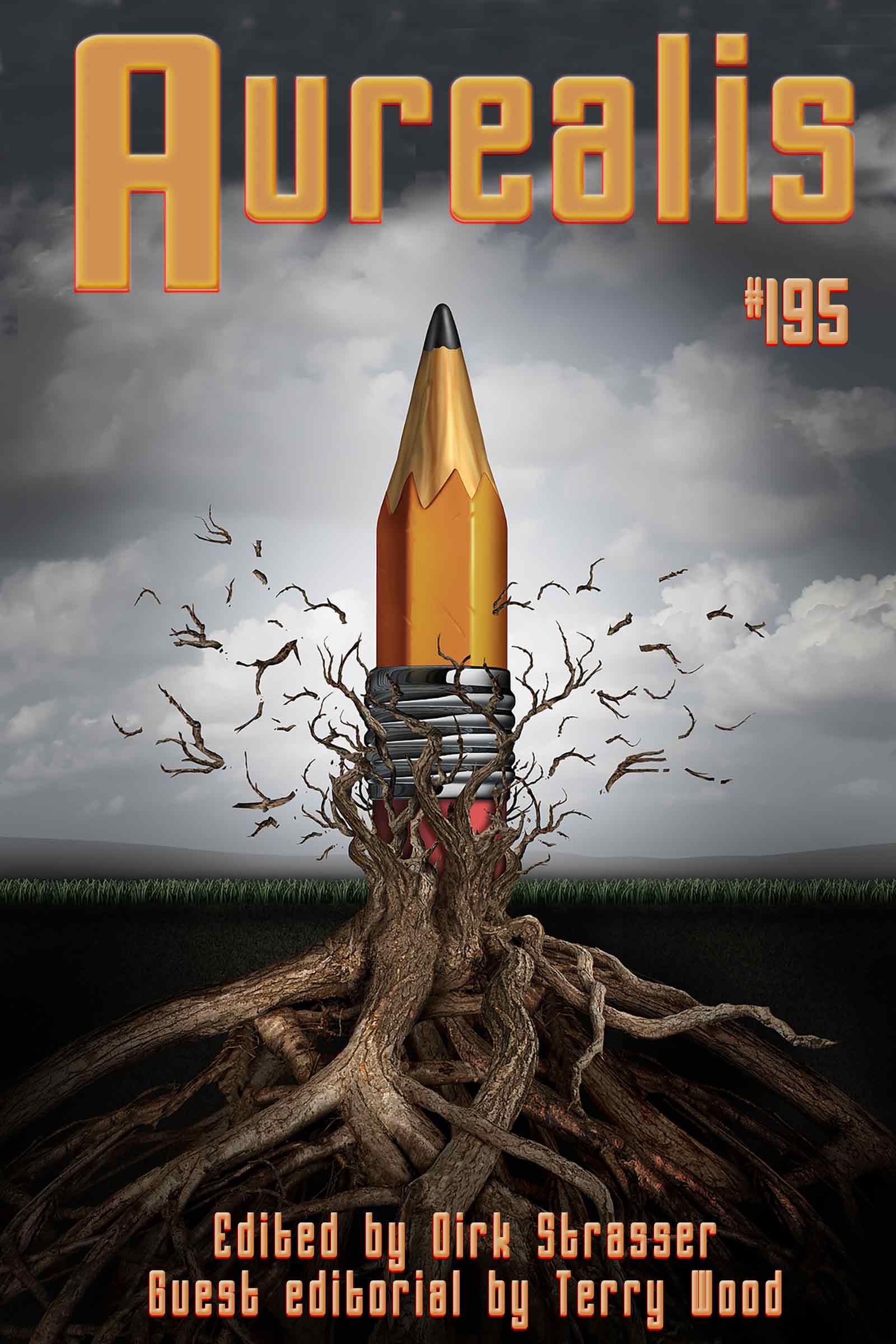
A fantastic cover, a guest editorial from Eugen Bacon, wonderful new stories, brilliant non fiction, really superb art and great reviews.

Read extracts
Edited by Stephen Higgins
Buy this issue — or — Subscribe
From the Cloud Editorial
A New Game
by Matt Freeman

About Matt Freeman

Matt Freeman was shortlisted for the Richell Prize in 2024 for his debut horror collection, Old Monsters, in which reimagined vampires, ghosts and werewolves haunt the backroads and suburbs of contemporary Australia, unveiling the horror beneath everyday life. His work has appeared in Two Wolves Digest and Visible Ink.
Anna, in the Abstract
by Andrew David

About Andrew David

Andrew David is a computer engineer working in the energy transition. He grew up around the industrial city of Newcastle, where he lurked in mines and power stations, before traveling in search of in-real-life (IRL) solarpunk (currently in Naarm). His writing is forthcoming in Overland.
The Book of Middles
by EC Fuller

About EC Fuller

EC Fuller is the short story category winner of the 41st Annual Adult Creative Writing Contest hosted by the Tulsa City-County Library and received an honorable mention in the young adult novel category of the Oklahoma Writers’ Federation Annual Writing Contest. She has been published in the Tulsa Review, Metaphorosis Speculative Magazine, and Hexagon Speculative Fiction Magazine, among other mags
The Quirky Life of Hugo Gernsback
by Lynne Lumsden Green

About Lynne Lumsden Green

Lynne Lumsden Green has been writing stories since she was eight years old and persists in writing daily. If you want a taste of her work, you can find stories in Antipodean SF and articles in the Aurealis magazine.
An Interview with Stephen Higgins, Creator of ‘Valis’, a Musical Album Inspired by the Words of Philip K Dick
by Michael Pryor

About Michael Pryor

Master storyteller Michael Pryor is one of Australia’s most popular and acclaimed authors of Fantasy and Science Fiction. He has published more than thirty-five novels, more than sixty short stories, and has over one million words in print. He is one of the co-publishers of Aurealis, Australia’s longest running Fantasy and SF magazine. He has been shortlisted for the Aurealis Award eleven times.
Hacking the Flesh: the Future of the Human Form
by Stuart Olver

About Stuart Olver

Stuart Olver lives in Queensland, Australia with his wife, two sons, and a very goofy border collie. He relishes all things science related and has sold speculative fiction to national and international anthologies. His previous article for Aurealis discussed Gothic Tasmania. In 2026, his short story ‘The Ice Lions’ will appear in the Black Beacon Book of Horror 2.

From the CloudStephen Higgins

From the Cloud: Guest Editorial
Eugen Bacon
I used to feel a certain way about couples who chose not to have any children—their babies were cats, dogs, lizards, even snakes. My perspective was a cultural positioning, coming from an Afrocentric background where family, community and the importance of a name, and keeping it alive, were soul. I heard no-kids folk speak of the cost of raising a child, and I thought: that’s a bit selfish, someone raised you. But, now, I get it—forced to get it—because my Gen Z son would rather plummet himself from a clifftop than sire a child. His reasons? ‘What world are we bringing them into, Mum?’ And he’s right. A Gen Z, same mettle as Greta Thunberg, the generation that took to the streets in School Strike 4 Climate (SS4C) and governments and teachers could do bugger-all about it.
The dystopian nature of our world today—with all its storms, droughts, rising sea levels, floods, wildfires, bleached coral, air pollution, disease, poverty, hate, forced displacements, wars and genocides—is not just about climate. It doesn’t start or end with the US and its nincompoop and the sycophants adulating deprived leadership. The book bans, the detention centres and all the garbage about vaccines and DEI hires…I think of George Orwell’s Animal Farm (1945), Philip K Dick’s The Man in the High Castle (1962), Ray Bradbury’s Fahrenheit 451 (1953), Margaret Atwood’s The Handmaid’s Tale (1985)… and I wonder whether these authors and their books were visionary, or are we today in 2026 enacting into reality the dystopian science fiction they wrote?
My 2022 Afrofuturistic dystopian novel, Mage of Fools, was a cautionary tale tackling climate change that killed men. It was also a story about a social world that took and took, oppressing and murdering its citizens in public executions. I invented a made-up African country, Mafinga—the name of a real town in Tanzania where I was born—and I placed in it strong female protagonists, like Jasmin, who hid a banned story machine, and Mama Apiyo, who was a mentor to the forced factory workers, and Mama Gambo, whose husband the system murdered, and Solo, who was Jasmin’s lover and led the resistance.
The story was purely fictional because, at the time, Tanzania was one of the most peaceful countries in the world. If someone told you they were a refugee from Tanzania, you’d laugh them out of the room. Then, in October 2025, elections happened in the real Tanzania. We saw turmoil and killings (government sanctioned), as the Zoomers—these Gen Zs—took to the streets chanting against dictatorship. People ‘disappeared’, or were imprisoned and tortured, including a TikTok influencer who danced to a song called ‘Nywinywi’ (look it up) and she was charged with treason, a crime punishable in Tanzania by hanging.
I wasn’t being prophetic when I wrote Mage of Fools, that dystopian story—one that wanted to come out—and it’s laughable to think the Tanzanian government might have read it and chosen to enact it three years later. As writers of science fiction, fantasy and horror, we can only write because we must do so, exhilarating, detestable, painful though this might be.
In speculative fiction, we can explore our place in the universe, ask fundamental philosophical questions, interrogate the past and learn from it, contemplate a different future. Through a different kind of writing, we can engage with difference and, hopefully, in our worlds and fictions, cultivate an awareness to more inclusive worlds.

All the best from the cloud!
Eugen Bacon

From A New GameMatt Freeman

Toby, a curly haired boy with a nervous smile, stood in the middle, fidgeting. That’s sweet, Alison thought. They’ve made him the centre of attention.
When the circle was made, they began to turn around him. They started slowly, but soon turned faster, with the natural momentum of children in a circle, until they were almost skipping, hands outstretched, their eyes never leaving the boy in the middle. The classroom windows were too thick for her to hear them, but from the rhythm and the intense concentration in their faces, Alison thought they might be humming. Two girls almost fell, clutched at each other, and stumbled on. Toby vanished and reappeared as the bodies of the children flashed by, watching the others with wide brown eyes as they spun around him. Suzy’s hair lifted from her shoulders.
They stopped, pointed at Toby and barked a single word, white teeth flashing. Toby’s mouth opened, and then closed again. He bit his lip. Help him, Alison silently willed through the glass. He doesn’t know what to do.

From Anna, in the Abstract Andrew David

There were parties. Abandoned silos lit with fairy lights and impromptu art shows in the metallic holds of old canal boats on the Spree. They began, ended or circled through the squat; its central marble staircase coiling around the open lift shaft, sprouting doorways (doors long removed) onto unexpected space. The previous tenants—a cluster of software firms—had opened up the turn-of-the-century residential block before the latest tech collapse turfed them out, making way for the new wave of autonomist squatter-artists.

From The Book of MiddlesEC Fuller

Because any book now could be The Book of Middles, please read this entire introduction to the first edition of The Book of Middles: A Definitive History. Make sure the subtitle says A Definitive History. There is a window of time where a reader can put this book down and continue their life without interruption before the mycelium penetrates their palms and the spores germinate in their lungs.
As an expert in parasitic fungi, I admire how well the Book’s infectious mechanisms work to infect hosts and replicate itself. We who live on planet Earth need a cure. You won’t find one in the pages here. But there is a vaccine, which is given the same way the Book works to lure you. It is told as a story. And the story is mine.

From The Quirky Life of Hugo GernsbackLynne Lumsden Green

Most readers and writers of science fiction have heard of Hugo Gernsback; the most prestigious SF awards are named the Hugo after him. For those who don’t know, the Hugo Award is an annual literary award for the best science fiction or fantasy works of the previous year. The awards ceremony occurs at the World Science Fiction Convention and recipients are chosen by its members. Hugo Gernsback was honoured because he was the publisher of Amazing Stories, the first pulp magazine devoted to science fiction stories. He launched the magazine in April 1926. For that alone, he deserves recognition, but Hugo Gernsback did so much else.

From An Interview with Stephen Higgins, Creator of ‘Valis’, a Musical Album Inspired by the Words of Philip K DickMichael Pryor

Stephen Higgins is one of the founders of Aurealis and continues as one of the managing editors. He is also a talented musician who has just released an album that has an excellent genre inspiration.

From Hacking the Flesh: the Future of the Human FormStuart Olver

It is widely assumed that we cannot escape a future in which humans will physically meld with machines to a greater or lesser extent. From bionic implants to permanent wearable devices to nanobots, both our bodies and minds could be enhanced or, otherwise, transformed in ways we are only beginning to imagine. Centuries, hence, could likely usher in the age of the cyborg and, rather than being the menacing brutes portrayed often in fiction, they would be the norm rather than the exception, walking our streets and sitting in our offices without so much as the batting of an eyelid.

Bookworld banner.

From the archives

story
Monday-child • • • By C S McMullen
story
Abode • • • Patty Jansen
review
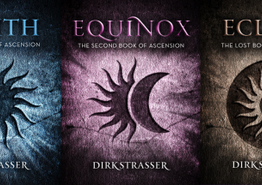
The Books of Ascension Trilogy by Dirk Strasser • • • Alex Stevenson
review
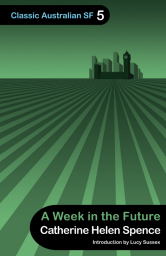
A Week in the Future by Catherine Helen Spence • • • Russell Blackford
story
Rolling For Fetch • • • Jason Fischer
feature
E-publishing: An Hour with Greig Beck • • • Crisetta MacLeod
review
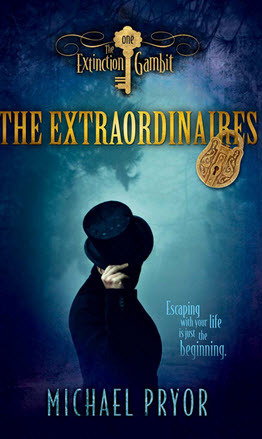
The Extinction Gambit by Michael Pryor • • • Carissa Thorp
review
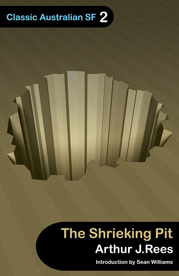
The Shrieking Pit by Arthur J. Rees • • • Russell Blackford
feature
Trilogies and More – why one fantasy book is never enough • • • Crisetta MacLeod
story
Love Death • • • Andrew J McKiernan
View all
March 4, 2026 by Stephen Higgins
Leave a comment

Valis – Music inspired by the writing of Philip K. Dick

The new album from Stephen Higgins has been released. ‘Valis’ has 9 instrumental tracks inspired by the writing of Philip K Dick. ‘Valis’ is available whereever you get your music.

Posted in Uncategorized
July 13, 2024October 2, 2024 by Dirk Strasser
Leave a comment

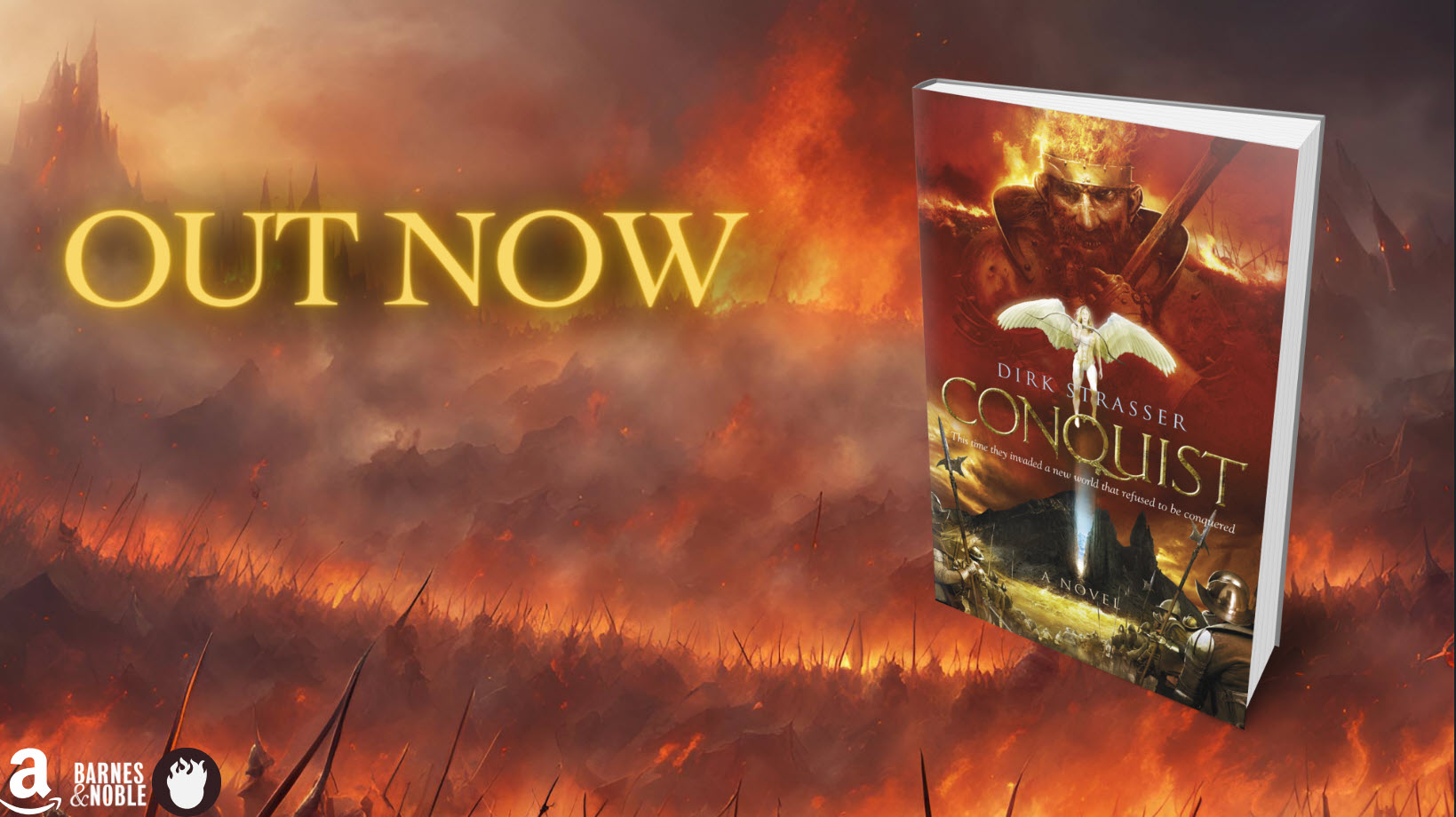
Conquist is now available!

Dirk Strasser’s historical fantasy novel Conquist (Roundfire Books) was published on 1 September 2024. See what all the fuss is about.

Universal Buy Link

This time they invaded a new world that refused to be conquered.

Posted in Uncategorized Tagged conquistadors, incas
November 6, 2023 by Stephen Higgins
Leave a comment

The Apocryphal Australia Podcast

You think you know Australian history? Think again. Season 2 of Apocryphal Australia brings more results from years of research into the little known corners of this wide brown land, with bits of green.

Available wherever you get your podcasts!

Posted in Uncategorized
Blog
/AurealisFSF @AurealisMag
  • About Us
  • Explore the Archives
  • Contact Us

© Chimaera Publications